VOTE FOR A FUTURE CATEGORY
Plants & Trees
Flowers, ferns, cacti and towering trees.
DINOSAUR AGAINST DINOSAUR · FIVE ROUNDS A DAY · 60 DINOSAURS
Turn your phone upright
The board needs the height.
Slide left or right anywhere on the board to resize the white silhouette. Arrow keys resize it a step at a time, Enter locks in your guess.
Slide anywhere on the board to resize · then Lock inSlide anywhere on the board to resize
0out of 1,000
Pick the category you’d most like to play. Votes help us choose what to build next; nothing here is playable yet.
Flowers, ferns, cacti and towering trees.
Balls, rackets, boards and goals from your favourite sports.
Flutes, guitars, drums and grand pianos.
Bacteria, cells, pollen and tiny organisms — explore sizes under a microscope.
Loading your vote…
Have another theme in mind?
Want something new on the table?
01 / A different sense of scale
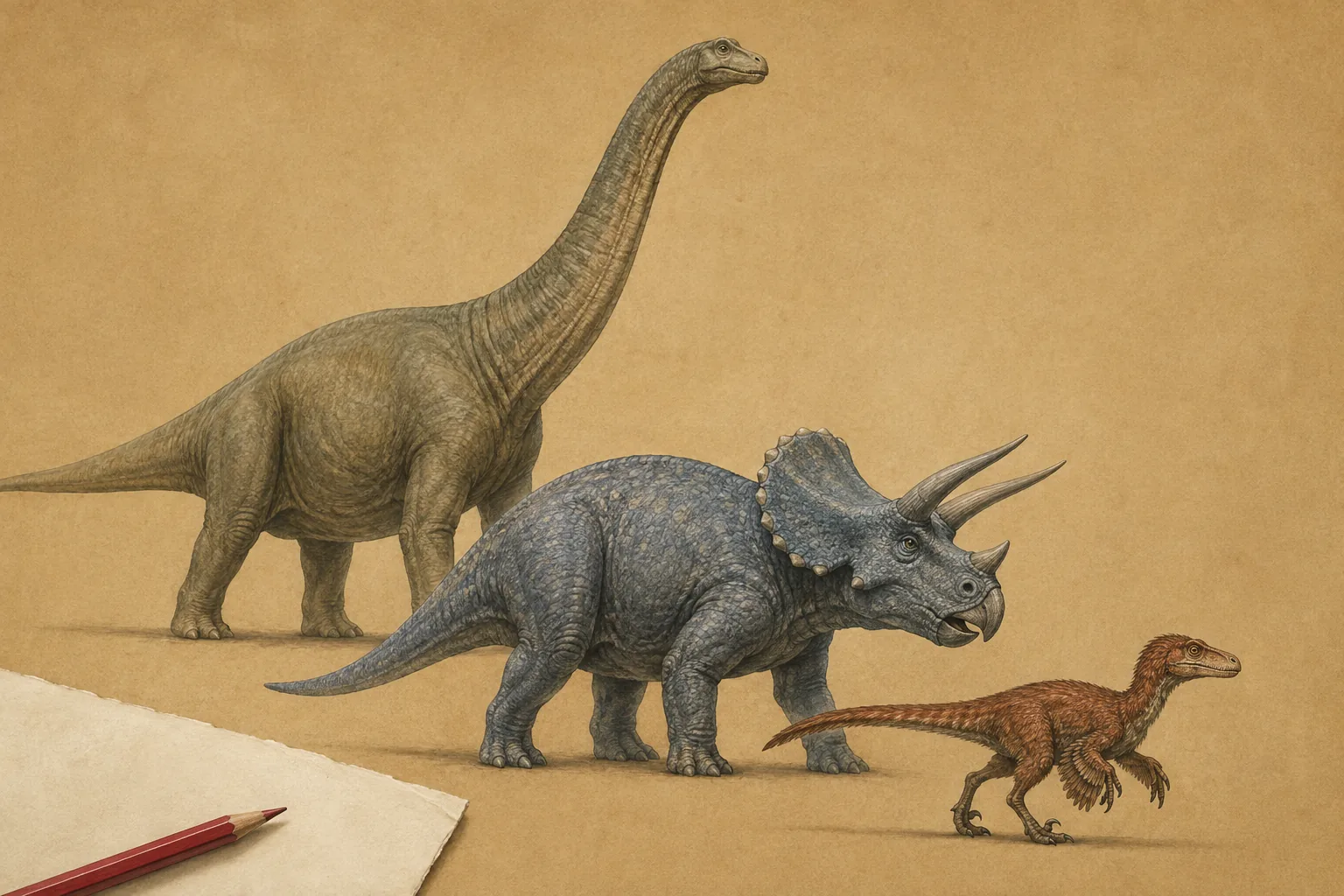
You recognise the horns, the plates and the teeth. But how much space would the whole animal take up? Size It Up Dinosaurs asks that question: compare one dinosaur with another, adjust your guess and discover how well you understand their proportions.
The collection brings familiar giants together with smaller dinosaurs that are easy to overlook. A long neck, a deep body and a towering sail can each make an animal feel larger, even when the measured dimension tells a different story. Size It Up Dinosaurs turns those first impressions into something you can test.
Play the five-round daily at the top of this page, then explore the illustrated guide below. Each round pairs two dinosaurs from this collection. You can also practise with fresh pairs in Dinosaur Unlimited.
02 / Look · resize · compare
Size It Up Dinosaurs uses the familiar five-round daily format. The useful habit is the same in every category: read what is being measured before you judge how large the picture looks.
Start with the named dimension and the reference ruler. The dinosaur may have a tall crest or a long tail, but only the stated measurement answers the question.
Imagine how many references fit along the target. Move and resize your guess until the relationship looks right. Size It Up Dinosaurs rewards a sense of proportion, rather than remembering every number.
The reveal shows your guess against the reference size. Use the difference to improve the next estimate; the size information belongs after the guess, not beside an unanswered daily round.
03 / Follow the measured dimension
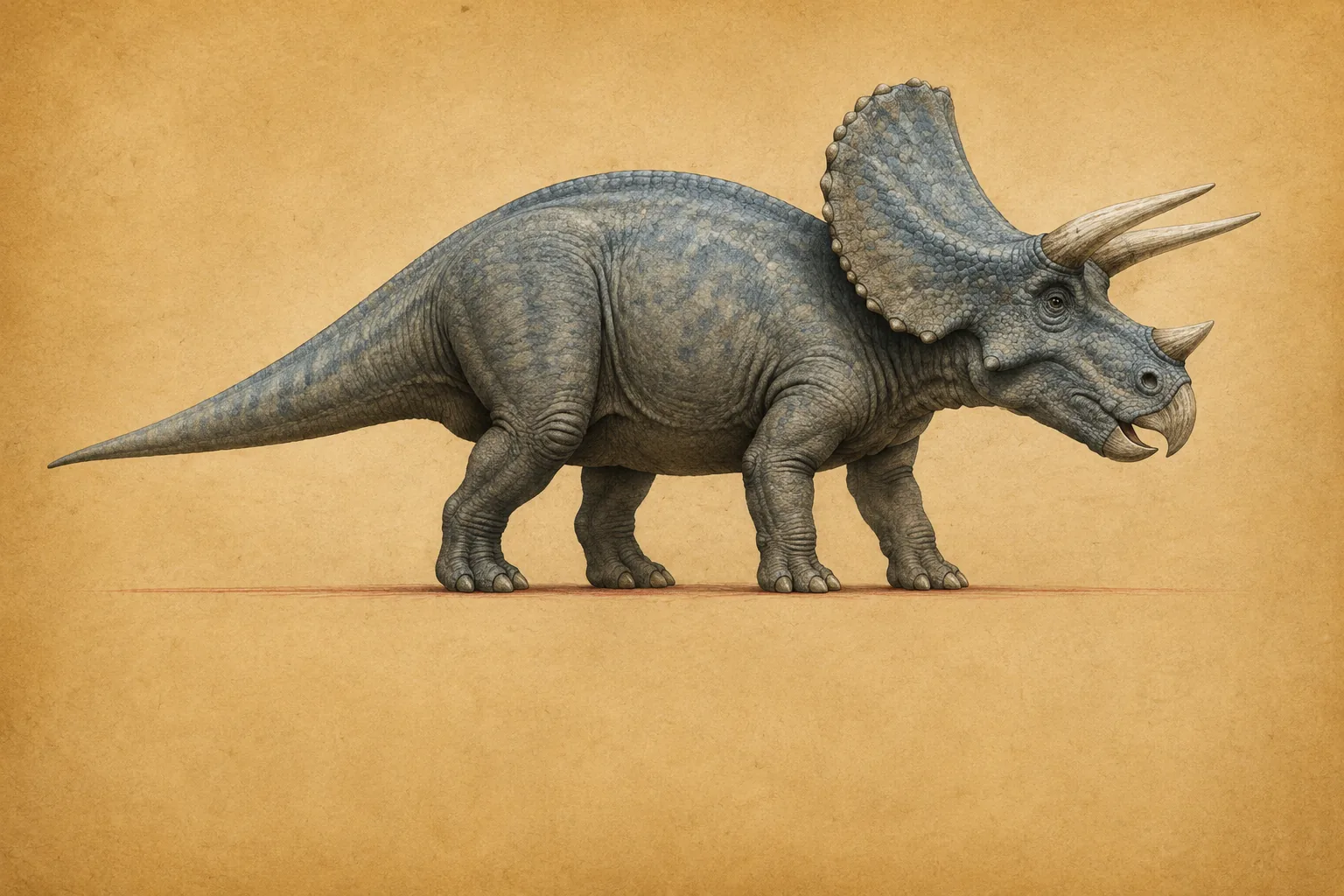
A useful dinosaur size comparison begins with matching dimensions. Whole-body length, standing height and body mass answer different questions. Size It Up Dinosaurs states the measurement used for each animal, so a high shoulder or dramatic sail does not quietly become extra length.
For whole-body length, pay attention to the snout and the tail. A curled tail can make the same animal occupy less horizontal space, and a forward-projecting horn is not automatically the start of its body-length measurement. Read the endpoints rather than treating every visible extremity as a ruler mark.
The illustrations in this guide explain those ideas. They are not measurement charts. In Size It Up Dinosaurs, game values and their measurement labels come from checked records, with artwork positioned to make the chosen dimension understandable.
04 / Familiar names, unfamiliar bodies
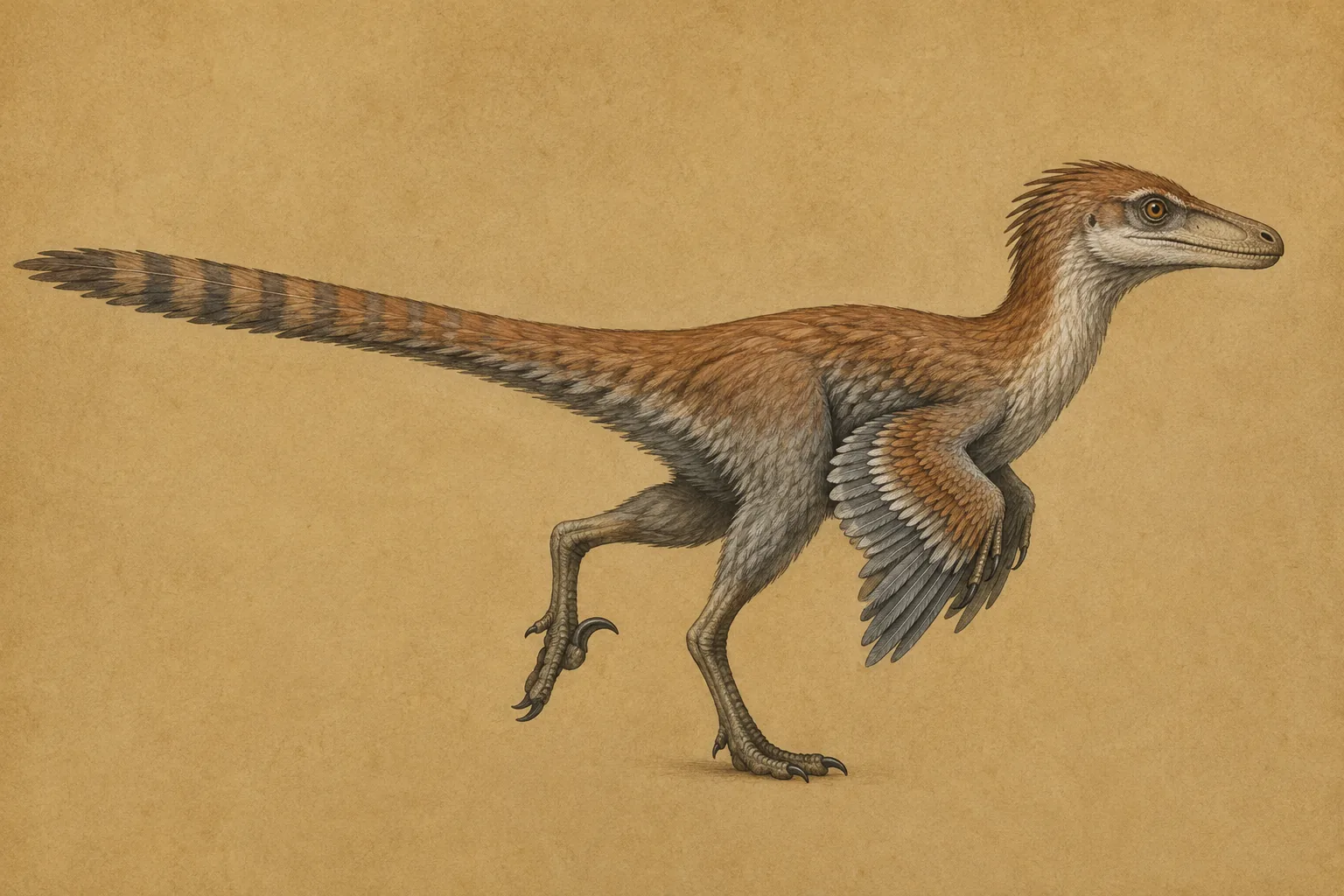
Velociraptor is a good place to reset your expectations. The Natural History Museum describes an animal about 1.8 metres long, with a long tail and a feathered body. Size It Up Dinosaurs is based on real dinosaur names and researched reconstructions, rather than the dimensions of a film creature.
Plates, frills and feathers help you recognise an animal, but they can distract from the body beneath them. For Size It Up Dinosaurs, look for the torso first, then follow the neck and tail. Keep the full outline in mind without assuming that the most dramatic feature determines the answer.
05 / A number you can picture
Start with a ratio rather than two isolated numbers. Our dinosaur library records Tyrannosaurus rex at 12 metres and Brachiosaurus at 22 metres in total length. Dividing those values gives about 1.8 reference animals. These are general library examples, not answers to a daily puzzle.
Size It Up Dinosaurs uses the same approach to turn an unfamiliar number into a visible relationship. Compare length with length, and keep height or weight out of that particular calculation. The bars below use the current library values; the surrounding AI illustrations are not drawn to those scales.
TOTAL LENGTH / CURRENT LIBRARY VALUES
1.8× as long, using these two library values.
06 / The collection
The Size It Up Dinosaurs library contains 60 dinosaurs. It includes familiar names such as Triceratops and Diplodocus alongside smaller animals such as Protoceratops and Compsognathus. Each entry has a source-backed length and a silhouette used on the game board.
Size It Up Dinosaurs includes long-necked sauropods, horned and armoured plant-eaters, small feathered hunters and larger predators. The mix gives the collection more to explore than a sequence of similar-looking giant theropods.
07 / Train your eye
You do not need to memorise the roster to enjoy Size It Up Dinosaurs. Start with a few habits that make any size comparison easier.
Follow the tail all the way to its tip. A long, narrow section is easy to ignore even though it contributes to total body length.
Ask whether the target is closer to half, one, two or three references. Refine that rough estimate instead of guessing an isolated metre value.
A bulky torso can look larger than a slender body of the same length. In Size It Up Dinosaurs, use the named dimension to decide which impression matters.
08 / What the fossils can tell us
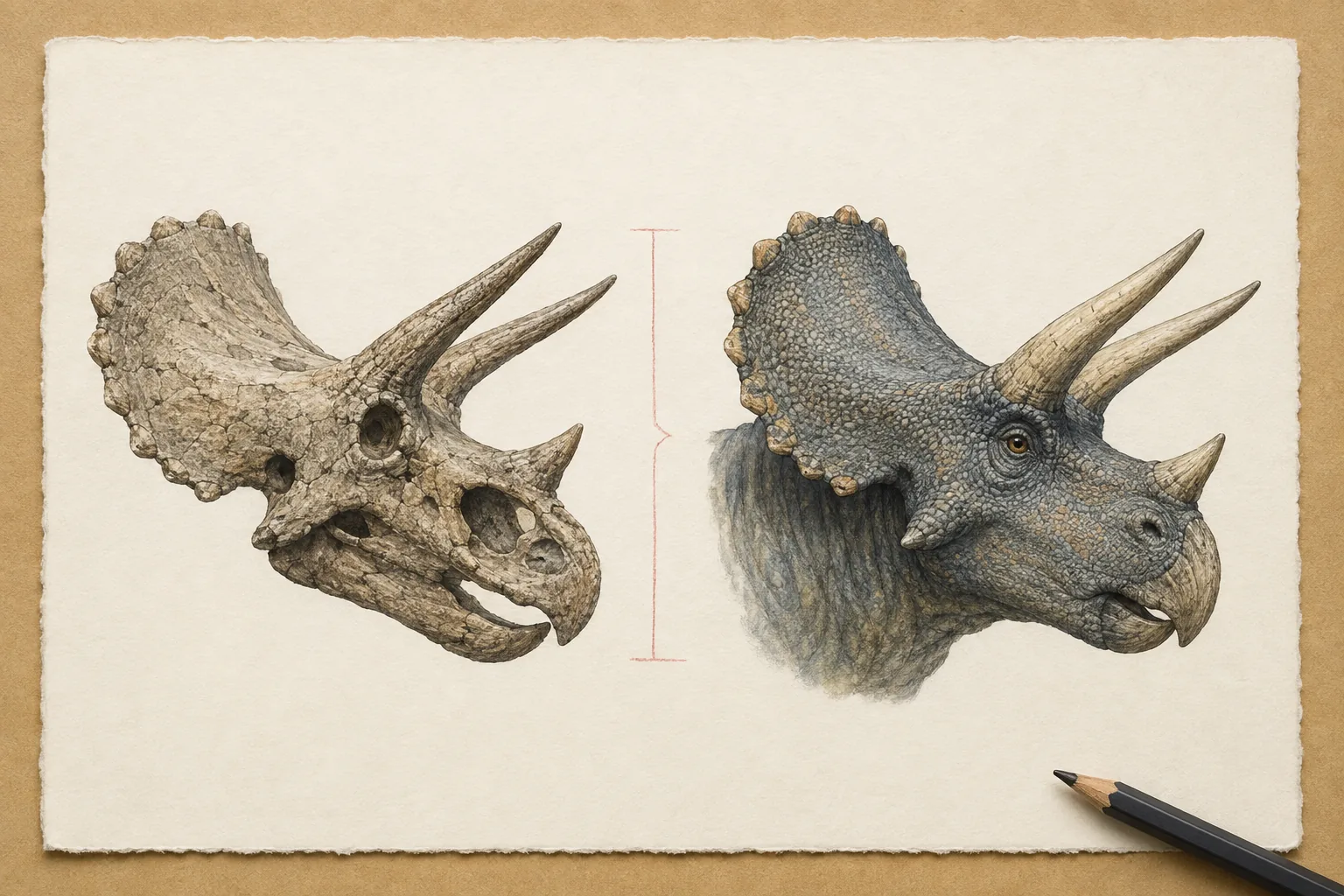
An extinct animal cannot be measured like a living one. Fossils preserve different amounts of the skeleton, and a reconstruction fills in what is missing. Size It Up Dinosaurs therefore records an identified animal, a stated dimension and a source behind each scoring value.
A museum mount, a particular specimen and an estimate for a species are not interchangeable. Size It Up Dinosaurs uses a selected published estimate for each entry, rather than treating that number as the exact size of every adult. Brontosaurus uses the 22-metre estimate published by the American Museum of Natural History under its older name, Apatosaurus excelsus.
Colour is another distinction. The AI illustrations use restrained natural colours to make the animals readable on the paper board; those colours are artistic reconstructions. The sources support the scientific information, not every painted patch of skin or feather.
09 / Questions from the field
10 / Keep your eye in
Finished today’s Size It Up Dinosaurs? Practise with new dinosaur pairs in Unlimited, or try the Animals daily for a wider range of shapes and measurements. You can also explore past games or visit the separate answers archive after playing.